
Why Premium Grilles Last Longer
Table of Contents
Why Premium Grilles Last Longer: Material Quality and Construction
Stainless Steel Grades and Corrosion Resistance
Steel Thickness and Durability
Air Vent Materials Comparison: Premium vs Budget Options
Air Vent Lifespan: Expected Years of Service
Component-by-Component Lifespan Breakdown
Premium Versus Budget Ownership Costs
Weather Protection and Rust Prevention
Air Conditioning Grille Maintenance for Long-Term Performance
Made to Measure Air Vents: Custom Fit and Extended Durability
Warranty, Repairability, and Long-Term Value
Frequently Asked Questions
Last Updated: October 18, 2026
Why Premium Grilles Last Longer: Material Quality and Construction
When sourcing air conditioning grilles for a residential or commercial project, the price gap between premium and budget options reflects something real: material quality and how grilles are engineered to survive years of temperature fluctuations, humidity, and constant airflow.
Premium grilles last longer because they start with better raw materials and tighter construction tolerances. The difference is measurable in how long components resist corrosion, maintain structural integrity, and perform without degradation. At Aircon Grilles, we've built our reputation on understanding why this matters for builders and facility managers who can't afford mid-project failures.
Grille longevity comes down to three factors: steel grade, material thickness, and how components are joined. Each compounds over time. A premium grille costs more upfront but avoids the hidden costs of premature replacement, maintenance emergencies, and performance loss.
Stainless Steel Grades and Corrosion Resistance
Stainless steel is a family of alloys with dramatically different corrosion resistance profiles. The grade determines how long a grille survives humid environments without pitting, staining, or structural failure.
304 stainless steel is the industry standard for premium HVAC applications. Its chromium and nickel content creates a passive oxide layer that protects the metal and repairs itself when scratched, so it handles thermal cycling and moisture without degrading.
Budget grilles often use 430 stainless steel or painted mild steel. 430 has less nickel and chromium, so its passive layer is thinner and repairs more slowly; in humid conditions it develops surface rust and pitting within months. Painted mild steel fails faster still once scratched, as the carbon steel underneath oxidises rapidly.
The practical difference: a 304 stainless steel grille in a humid climate can operate for 15-20 years without visible corrosion. A 430 grille in the same environment shows surface degradation within 2-3 years. The chemistry is straightforward, better alloy composition equals longer service life.
Steel Thickness and Durability
Material thickness determines how long a grille resists warping under thermal stress. Thicker steel absorbs temperature swings without deforming, whilst thin material buckles and loses airflow efficiency as it expands and contracts.
Premium grilles typically use steel between 1.2mm and 1.5mm thick, providing rigidity whilst remaining workable for custom fabrication. When air temperature swings 20 degrees in a day, common in commercial buildings with aggressive HVAC cycling, thick steel maintains its shape. Thin steel (under 0.8mm) flexes and warps, changing airflow patterns and creating noise as the grille vibrates.
Thickness also determines how long a grille survives physical wear. Installation involves handling, fitting into ducts, and on-site adjustment. Thin material dents easily and cracks at stress points; thick material absorbs impact without permanent damage.
Custom-made grilles from Aircon Grilles are fabricated to specification, which means thickness is controlled precisely. Off-the-shelf budget options sometimes vary in thickness across a single unit, creating weak points that fail first.
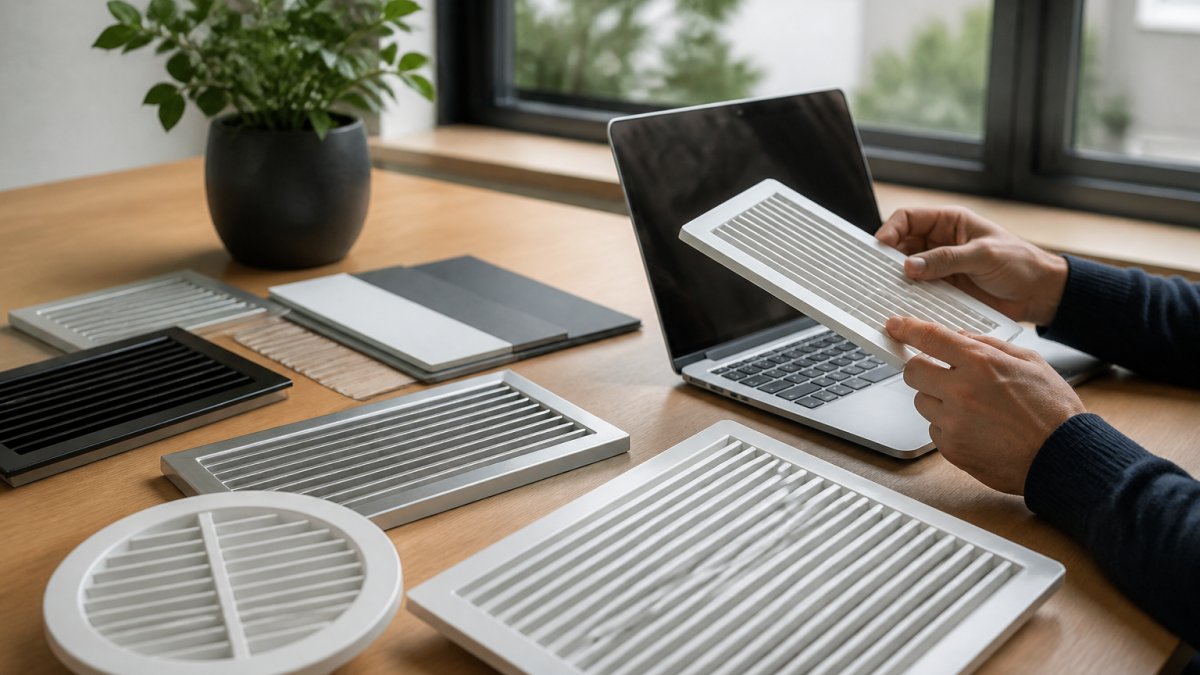
Air Vent Materials Comparison: Premium vs Budget Options
Premium grilles use higher-grade stainless steel, thicker gauge material, and precision-welded joints. Budget grilles cut costs with lower-grade alloys, thinner material, and faster assembly methods that introduce weak points.

A 304 stainless steel grille with 1.2mm thickness and welded construction costs more to produce than a 430 grille with 0.6mm thickness and crimped joints.
Premium materials also affect aesthetics. Higher-grade stainless steel maintains a clean, modern finish for years. Budget materials develop surface discolouration, pitting, and a dull appearance within months in humid conditions.
The cost difference between materials is real but often misunderstood. A premium grille might cost 40-60% more than a budget alternative, but it lasts 3-5 times longer. Over a 15-year building lifecycle, the premium option often costs less per year of service.
Air Vent Lifespan: Expected Years of Service
How long a premium grille actually lasts depends on environment, usage intensity, and maintenance, but real-world benchmarks exist.
Premium 304 stainless steel grilles in standard indoor environments (controlled temperature, low humidity) can operate for 20-25 years with minimal maintenance. In humid environments (coastal areas, tropical regions, high-moisture commercial spaces like kitchens or bathrooms), expect 12-18 years before corrosion becomes visible. In harsh conditions (salt spray, industrial settings), premium grilles still perform reliably for 8-12 years.
Budget grilles follow a different timeline. In standard indoor environments, they last 5-8 years before material fatigue or corrosion becomes noticeable. In humid environments, expect 2-4 years. In harsh conditions, budget grilles often fail within 1-2 years.
The difference isn't linear, it's exponential. Premium materials resist corrosion through active chemistry (the passive oxide layer); budget materials rely on passive resistance, which degrades continuously. Corrosion accelerates once it starts on a budget grille, while a premium grille actively repairs the damage.
Component-by-Component Lifespan Breakdown
Knowing which components fail first explains why premium construction matters. A grille comprises the frame, louvers or bars, fasteners, and any hinged or removable elements.
The frame is typically the longest-lived component in a premium grille. Welded 304 stainless steel frames resist corrosion and maintain structural integrity for the full service life. In budget grilles, frames develop rust and lose rigidity within 5-7 years.
Louvers or bars are the next-longest-lived component. Premium grilles use thicker, higher-grade material that resists bending and warping. Budget louvers flex and lose aerodynamic efficiency within 3-5 years.
Fasteners (bolts, rivets, welds) are often the first failure point in budget grilles. Cheaper fastening methods corrode faster than premium welds or stainless fasteners. A budget grille might have loose louvers within 2-3 years as fasteners corrode and lose grip.
Hinged or removable elements fail fastest in budget grilles because they experience more movement and stress. Premium hinges use stainless steel throughout. Budget hinges use mild steel or plated fasteners that corrode quickly.
Component | Premium Lifespan | Budget Lifespan | Key Difference |
Frame | 20-25 years | 5-8 years | Material grade and weld quality |
Louvers/Bars | 18-22 years | 3-6 years | Steel thickness and alloy composition |
Fasteners | 15-20 years | 1-3 years | Stainless vs mild steel |
Hinges/Removable Parts | 12-18 years | 1-2 years | Corrosion resistance and movement stress |
Premium Versus Budget Ownership Costs
The true cost of a grille isn't the purchase price but total cost of ownership: purchase, installation, maintenance, and replacement.
A premium grille from Aircon Grilles costs more initially. A 595x595 linear bar return air grille hinged and filtered, for example, is priced at AU$294.45, with installation in Melbourne available through our professional team. Maintenance is minimal: occasional cleaning to maintain appearance and airflow efficiency.
A budget grille might cost 30-40% less upfront, but ownership costs compound quickly. Within 5-7 years corrosion becomes visible and performance degrades, requiring a new unit, another installation, and managed downtime.
The cost-per-year calculation favours premium options significantly. A AU$300 premium grille lasting 20 years costs AU$15 per year. A AU$180 budget grille lasting 6 years costs AU$30 per year.
For commercial properties and rental buildings, this calculation matters even more. Replacement grilles require downtime, tenant disruption, and emergency service calls. Preventive investment in premium grilles eliminates these costs.
Weather Protection and Rust Prevention
Rust prevention is where premium materials and construction methods prove their value most clearly. A grille exposed to weather, humidity, or temperature cycling needs active protection against corrosion.
Premium grilles resist rust through material chemistry. 304 stainless steel's passive oxide layer continuously repairs itself, which means minor scratches or exposure to moisture don't trigger corrosion. The material is inherently rust-resistant without coatings or treatments.
Budget grilles rely on coatings or lower-grade stainless that corrodes gradually. Painted mild steel grilles lose their protective coating within months in humid environments. Uncoated 430 stainless develops surface rust and pitting as the thin passive layer fails.
Proper storage amplifies these differences. A premium grille stored outdoors under a quality cover remains pristine, while a budget grille stored the same way develops corrosion because the material itself is vulnerable.
Weather protection also includes proper installation. Grilles installed with gaps or poor sealing allow moisture to accumulate behind the grille, which accelerates corrosion.
Air Conditioning Grille Maintenance for Long-Term Performance
Maintenance extends grille lifespan and preserves performance. Premium grilles require less maintenance but still benefit from regular care.
Cleaning is the primary task. Dust and debris trap moisture and reduce airflow efficiency, so clean monthly in high-use environments and quarterly for standard use. Use a soft brush or compressed air; avoid abrasive cleaners that scratch the surface.
For stainless steel grilles, occasional polishing maintains appearance and reinforces the passive oxide layer. A microfibre cloth and mild stainless steel cleaner restore shine and protect against fingerprints and minor corrosion.
Inspection is equally important. Check grilles quarterly for corrosion, loose fasteners, or warping.
In humid or coastal environments, more frequent inspection is warranted. Check grilles monthly for surface changes. If corrosion appears, clean the affected area immediately and consider applying a protective coating.
Budget grilles require more intensive maintenance to extend their lifespan. Corrosion develops faster, so inspection should be monthly. Protective coatings may be necessary annually.
Made to Measure Air Vents: Custom Fit and Extended Durability
Custom-made grilles from Aircon Grilles offer durability advantages off-the-shelf options cannot match, because fabrication allows precise control over material grade, thickness, and construction method.
When a grille is made to measure, every dimension is exact. There are no gaps between the grille and the duct, which means no pockets for moisture to accumulate.
Custom fabrication also allows material selection based on environment. A grille for a coastal location can be specified in premium 304 stainless steel with extra-thick material and sealed joints.
Our team at Aircon Grilles works with builders and architects to specify grilles that match project requirements. For renovation projects with non-standard duct sizes, custom grilles ensure perfect fit. For new construction, custom specifications guarantee durability that meets the building's lifecycle expectations.
Custom grilles also support aesthetic goals. Modern-style air conditioning grilles can be fabricated in finishes and configurations that complement interior design. Premium materials maintain appearance for decades, which means the design intent survives the building's lifespan.
Warranty, Repairability, and Long-Term Value
Warranty coverage reflects manufacturer confidence in durability. Premium grille manufacturers typically offer 5-10 year warranties against corrosion and material defects; budget manufacturers offer 1-2 years or none at all.
Warranty terms matter because they signal expected lifespan. A 10-year warranty implies the manufacturer expects the grille to perform reliably for at least that duration.
Repairability also affects long-term value. Premium grilles are often designed with replaceable components, hinges, fasteners, removable louvers. If a single element fails, you can replace it without replacing the entire grille.
For commercial properties, repairability reduces lifecycle costs significantly. A AU$650 premium heat transfer kit that can be serviced and repaired over 15-20 years costs far less than replacing multiple budget units that cannot be repaired.
Long-term value extends beyond cost. Premium grilles maintain performance and appearance, which preserves building value and tenant satisfaction. Budget grilles degrade visibly, which affects how spaces are perceived and can require renovation sooner than planned.
Premium grilles last longer because they're built with materials and methods engineered for durability. At Aircon Grilles, we specialise in custom-made and off-the-shelf air conditioning grilles that deliver this longevity.
Frequently Asked Questions
What makes a premium air conditioning grille last longer than a budget option?
Premium grilles use higher-grade stainless steel (typically 304), thicker steel construction, and superior welding techniques that resist corrosion and warping. Budget grilles often use thinner materials or lower-grade alloys that degrade faster, especially in humid or coastal environments. Premium grilles maintain airflow efficiency over years of use, whereas budget options can lose performance within 2-3 years.
How long should an air conditioning grille last?
A quality premium grille can last 10-15 years or longer with proper maintenance, even in harsh outdoor conditions. Budget grilles typically last 3-5 years before rust, warping, or airflow degradation becomes noticeable. The difference depends heavily on material grade, climate exposure, and maintenance frequency. Custom-made grilles fitted correctly tend to last longer because they distribute air pressure evenly without stress points.
Are made to measure air vents more durable than standard-size grilles?
Made to measure air vents can last longer because they fit perfectly into your ductwork without gaps or misalignment that cause stress on components. Poor fit creates uneven airflow and pressure, accelerating wear on grates. Custom grilles also allow you to specify premium materials and construction methods tailored to your climate. In humid regions, specifying premium stainless steel in a custom grille provides better corrosion resistance than off-the-shelf alternatives.
What should I look for when buying a durable air vent?
Check the stainless steel grade (304 preferred), steel thickness (heavier is better), and construction method (welded joints are stronger than riveted). Verify the warranty period and whether replacement parts are available. Ensure the grille fits your ductwork precisely to avoid airflow problems. Request information about maintenance requirements.
Shop with us today

Comments